
Introduction
Dog ear infections can start with something as easy to miss as a little extra head shaking or an unusual smell. Before long, a dog may be scratching constantly, rubbing an ear against furniture, or becoming uncomfortable when the ear is touched. Understanding the signs of dog ear infections can help you recognize a problem early and decide when home care is appropriate and when veterinary treatment is needed.
Yeast and bacterial infections can cause many of the same symptoms, so it is not always possible to identify the cause simply by looking at the ear. Veterinarians may use an ear examination and cytology to determine whether yeast, bacteria, or both are involved.
Home cleaning can support healthy ears and may help prevent problems in dogs that are prone to recurring infections. However, cleaning an already painful or inflamed ear without veterinary guidance can make matters worse. This guide explains what to watch for, how yeast and bacterial infections differ, and how to clean your dog’s ears safely.
What Are the Common Signs of Dog Ear Infections?
The signs of dog ear infections can vary depending on the cause, location, and severity of the problem. Some dogs show obvious discomfort, while others develop subtle changes that owners notice only during grooming.
Frequent head shaking is one of the classic warning signs. Your dog may also scratch at one ear, rub the side of the face against the carpet, or tilt the head toward the affected side. Redness, swelling, unpleasant odor, and discharge are also common.
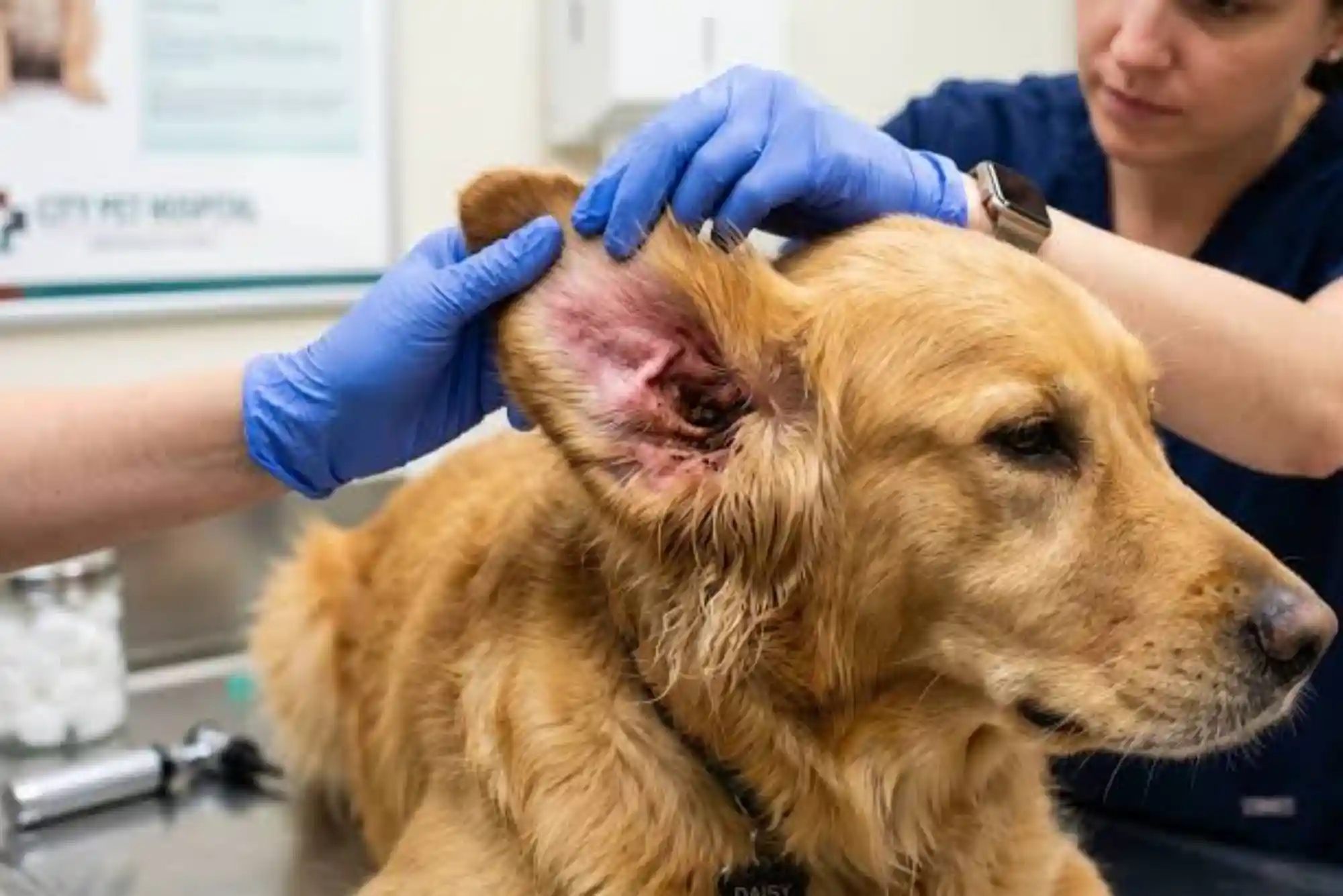
An infected ear may look different from your dog’s normal ear. The skin can become red and irritated, while the canal may contain wax, fluid, crusting, or dark material. Chronic inflammation can cause the ear canal to become thickened and narrowed.


Pain is another important clue. A normally friendly dog may pull away when you touch the ear, whine during cleaning, or avoid having its head handled. These changes should not be ignored.
A healthy ear generally has little odor and should not appear severely red, swollen, or painful. A sudden change from your dog’s normal ear condition deserves attention.
Yeast vs Bacterial Dog Ear Infections
One of the most common questions owners ask is whether they can tell a yeast infection from a bacterial infection at home. Unfortunately, appearance and smell can provide clues but cannot reliably identify the organism responsible.
Dogs can also have mixed infections involving both yeast and bacteria. That is why veterinary testing can be important when an infection is persistent, severe, or recurrent.
Signs of a Yeast Ear Infection
Yeast, particularly Malassezia, normally exists on canine skin in small amounts. Problems can occur when yeast overgrows in a warm, moist, irritated environment.
A yeast-related ear infection commonly causes significant itching, redness, an unpleasant musty odor, and dark or brown waxy discharge. Some dogs develop greasy debris around the ear opening. Chronic cases may cause thickened or darker skin.
Owners sometimes describe the odor as musty, sour, or similar to stale bread. Although odor can be suggestive, it should not be used as a diagnosis by itself.
Yeast problems can also occur alongside allergies. A dog that repeatedly develops itchy ears may have an underlying allergic or dermatological problem that needs attention rather than simply repeated ear cleaning.
Signs of a Bacterial Ear Infection
Bacterial infections can also cause redness, swelling, pain, head shaking, scratching, odor, and discharge. The discharge may be yellowish or otherwise moist and inflammatory-looking, although these characteristics are not enough to identify the bacteria involved.
Pain may be particularly noticeable when inflammation becomes significant. Your dog may resist ear handling or suddenly become uncomfortable when you try to examine the ear.
Some bacterial infections occur together with yeast. Therefore, assuming that every dark discharge means yeast or every yellow discharge means bacteria can lead to inappropriate treatment.
Why You Cannot Reliably Diagnose the Cause at Home
The most useful distinction is not simply color or odor. A veterinarian can examine the ear canal and collect a sample of the debris for microscopic evaluation. This can help identify yeast and bacterial organisms and guide treatment.
This matters because antifungal medication is appropriate for yeast, while bacterial infections may require antibacterial treatment. A mixed infection may require treatment directed at both.
Using leftover medication from a previous infection can therefore be risky. The current problem may have a different cause, and some ear medications are unsuitable when the eardrum is damaged.
Why Do Dogs Get Ear Infections?
A dog’s ear canal has a distinctive shape that can make it difficult for moisture and debris to escape. When humidity, wax, inflammation, or other factors alter the ear environment, microorganisms can multiply more easily.
Floppy or heavily haired ears can increase susceptibility in some dogs because they may reduce airflow. Swimming and bathing can also introduce moisture into the ear canal.
Allergies are another important factor. Dogs with environmental or food-related allergies may experience chronic inflammation that makes recurrent ear problems more likely. Parasites, foreign material, hormonal conditions, and other skin disorders can also contribute.
This is why recurring infections deserve more than repeated cleaning. If the same dog develops ear problems again and again, identifying the underlying trigger can be an important part of long-term management.
When Should You Take Your Dog to the Vet?
Mild wax buildup is not automatically an infection. However, an ear that is red, painful, swollen, strongly odorous, or producing abnormal discharge should be assessed by a veterinarian.
You should also seek veterinary care when your dog repeatedly shakes its head, scratches intensely, or becomes unusually sensitive around the ears. These symptoms can indicate inflammation that requires medication rather than routine grooming.
More urgent attention is appropriate if your dog develops balance problems, a noticeable head tilt, difficulty walking, vomiting, or signs of hearing loss. These can occur when disease extends into deeper portions of the ear.
A painful ear should not be aggressively cleaned at home. Veterinary guidance is especially important if there is a possibility of a damaged eardrum because some cleaning products can cause problems if they reach deeper structures.
How to Clean Your Dog’s Ears at Home Safely
For a dog with healthy ears or a cleaning routine recommended by your veterinarian, home ear cleaning can be straightforward.
Start with a veterinarian-approved canine ear-cleaning solution and cotton balls or gauze. Avoid inserting cotton-tipped applicators deep into the ear canal. They can push debris farther inside or traumatize sensitive tissue.
Gently lift the ear flap to expose the opening. Apply the recommended ear-cleaning solution without forcing the bottle tip deep into the canal. Then gently massage the base of the ear for roughly 30 seconds. This helps loosen debris so it can move toward the opening.
Allow your dog to shake its head if it wants to. This natural movement can help bring loosened material outward. Wipe away the debris that reaches the visible portion of the ear using clean gauze or cotton.
Do not continue if your dog shows significant pain. A healthy cleaning session should not involve forcing the ear or causing obvious distress.
Most importantly, follow the cleaning frequency recommended for your dog’s individual needs. Not every dog needs frequent ear cleaning. In fact, excessive cleaning can irritate the ear canal and potentially contribute to problems.
What Not to Use When Cleaning Dog Ears
Many household remedies are promoted online for ear problems, but homemade treatments are not automatically safe.
Avoid putting hydrogen peroxide, alcohol, vinegar mixtures, essential oils, or other household substances into an irritated ear unless your veterinarian specifically recommends the product. Some solutions can cause irritation, particularly when the ear canal is already inflamed or damaged.
Cotton swabs should not be pushed down the ear canal. They can move wax deeper into the ear and may injure the canal or eardrum.
You should also avoid repeatedly flushing an ear that is painful, severely inflamed, or producing substantial discharge. Those signs may indicate an infection requiring examination and medication.
How to Prevent Dog Ear Infections
Prevention begins with knowing what is normal for your dog. Check the ears regularly for changes in smell, color, wax, redness, or sensitivity.
Keeping ears dry is particularly useful for dogs that swim frequently. After bathing or swimming, gently dry the accessible portions of the ears and follow any drying routine recommended by your veterinarian. Moisture can encourage an environment where yeast and bacteria thrive.
Dogs with allergies or recurring ear infections may need a more individualized prevention plan. Simply cleaning the ears more often may not solve the underlying problem.
Your veterinarian may recommend a specific cleaner, cleaning schedule, allergy management plan, or other preventive approach depending on your dog’s history.
Can Home Cleaning Cure an Ear Infection?
Home cleaning can remove debris and support treatment, but it should not be considered a complete cure for an established infection.
A bacterial or yeast infection may require prescription ear medication. In more serious cases, oral medication or additional diagnostic testing may be necessary. Veterinary treatment depends on the organism involved and the condition of the ear.
Cleaning is often part of treatment because medication may work more effectively when excessive debris has been removed. However, your veterinarian may recommend a particular cleanser and frequency based on the condition of the ear.
Stopping treatment as soon as the ear looks better can also allow the problem to return. Follow the prescribed treatment schedule and attend recommended follow-up appointments.
How to Tell If Your Dog’s Ear Infection Is Getting Worse
Watch your dog’s behavior as well as the ear itself. Increasing pain, worsening odor, more discharge, greater redness, or persistent head shaking can indicate that the problem is not improving.
Changes in balance deserve particular attention. A dog that develops a head tilt, walks unsteadily, falls, circles, or seems nauseated may have involvement deeper in the ear.
Repeated infections are another reason to revisit the veterinarian. Chronic ear disease may be associated with allergies, anatomical factors, parasites, or other underlying conditions. Treating only the visible infection may not prevent another episode.
FAQs
How can I tell if my dog has a yeast or bacterial ear infection?
You may notice clues such as odor, discharge, itching, redness, and pain, but these symptoms overlap considerably. Yeast infections often produce a musty odor and dark, greasy debris, while bacterial infections may produce inflammation and yellowish discharge. However, these signs cannot reliably identify the cause. Veterinary examination and microscopic testing can provide a more dependable diagnosis.
Can a dog ear infection go away on its own?
Some mild irritation may resolve after the underlying trigger disappears, but a suspected ear infection should not be ignored. Untreated infections can become painful and may extend into deeper portions of the ear. Veterinary assessment is especially important when there is pain, discharge, strong odor, swelling, or persistent head shaking.
What does a yeast infection smell like on a dog?
A yeast-related ear problem can have a strong musty or unpleasant odor. Some owners describe the smell as sour or similar to stale bread. Odor alone, however, cannot confirm a yeast infection because other ear problems can also produce unpleasant smells.
How often should I clean my dog’s ears?
There is no universal schedule for every dog. Some dogs need regular cleaning, while others with naturally healthy ears may need very little routine cleaning. Over-cleaning can irritate the ear canal. Your veterinarian can recommend a frequency based on your dog’s breed, ear health, lifestyle, and history of infections.
Can I clean my dog’s ears if they are infected?
Cleaning may be part of treatment, but a painful, very red, swollen, or heavily inflamed ear should be evaluated before you attempt home cleaning. Your veterinarian can determine whether cleaning is appropriate and recommend a suitable solution. This is particularly important when eardrum damage is possible.
Why does my dog keep getting ear infections?
Recurring ear infections can be associated with allergies, moisture, ear anatomy, parasites, or other underlying skin and health conditions. Dogs with chronic allergies may be especially prone to repeated ear inflammation. If infections keep returning, ask your veterinarian about investigating the underlying cause rather than simply repeating the same cleaning routine.
Recognizing the signs of dog ear infections early can make a meaningful difference to your dog’s comfort. Head shaking, scratching, odor, redness, discharge, swelling, and pain are important warning signs, but they do not always reveal whether yeast, bacteria, or both are responsible.