
Introduction
For SaaS companies, SEO reporting is no longer just about showing whether keyword rankings went up or down. In 2026, marketing teams need to connect organic visibility with qualified traffic, sign-ups, pipeline, conversions, and revenue. That makes choosing the right SEO reporting tools an important part of building a measurable organic growth strategy.
A useful SEO report should answer practical questions: Did organic traffic increase? Which pages generated that growth? Which keywords moved into valuable positions? Did those ranking improvements bring the right visitors? And, most importantly, did SEO contribute to business outcomes?
The best SEO reporting tools help SaaS teams turn complicated search data into information that marketers, SEO specialists, product teams, and executives can actually use. Instead of relying on screenshots or disconnected spreadsheets, teams can monitor performance trends, identify opportunities, and communicate SEO wins clearly.
Why SaaS Companies Need Better SEO Reporting
SaaS SEO is different from many traditional websites because the customer journey can be long and highly measurable. A visitor may discover a product through an educational article, return through a comparison page, sign up for a free trial, and become a paying customer weeks later.
That means organic traffic alone does not tell the complete story.
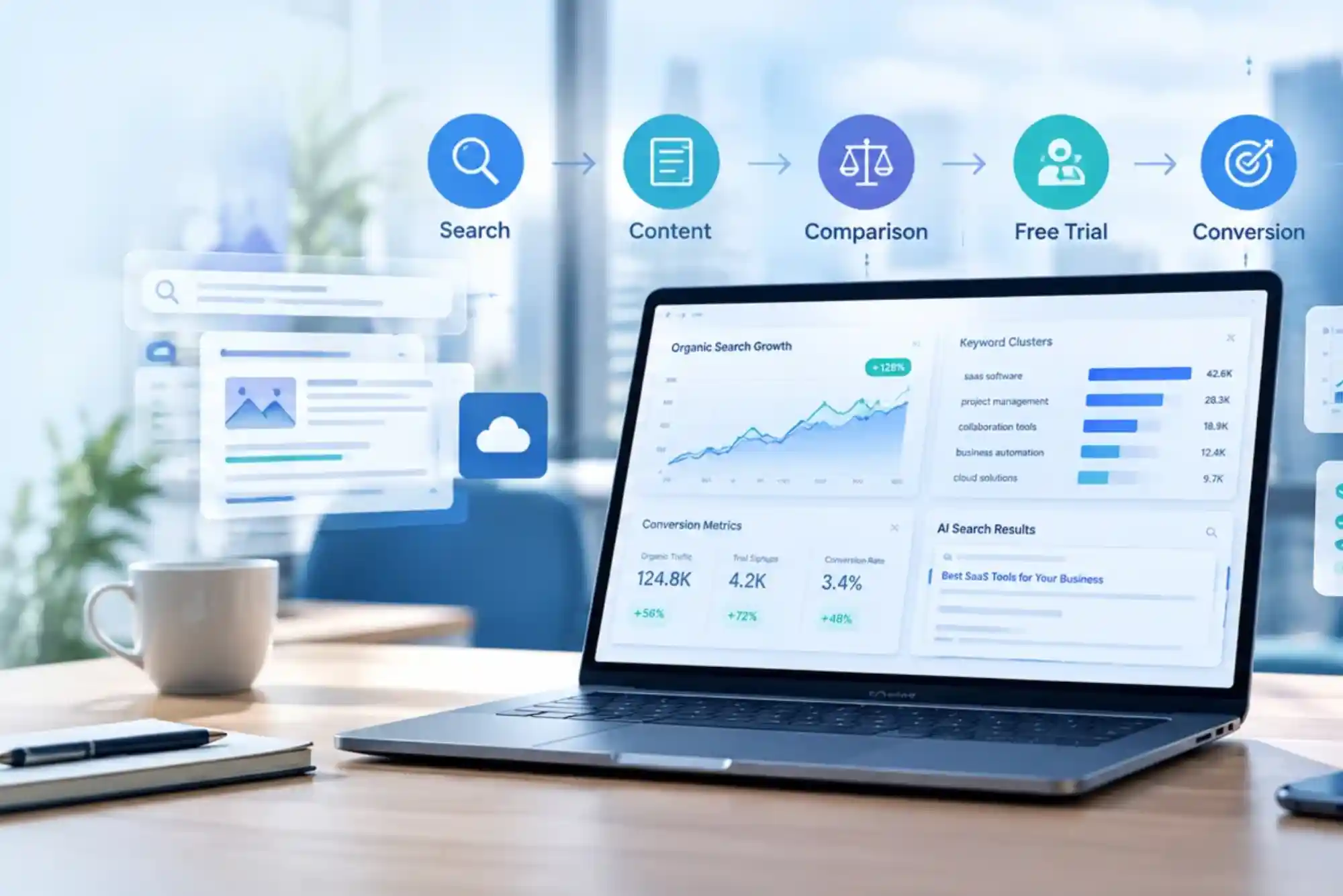
A strong reporting system should connect several stages of the journey. Organic impressions show visibility. Clicks show search interest. Landing-page engagement provides behavioral context. Sign-ups and demo requests indicate stronger commercial intent. Revenue attribution provides the business perspective.


The role of SEO reporting tools is to bring these signals together without making the reporting process unnecessarily complicated.
For example, a SaaS company might see organic sessions increase by 35%. That sounds positive, but the real question is what caused the increase. If most of the additional traffic came from low-intent informational searches with almost no conversions, the result may require a different interpretation than a 20% traffic increase that generated substantially more qualified leads.
What Makes a Good SEO Reporting Tool in 2026?
Modern SEO reporting tools need to do more than produce attractive charts. The underlying data needs to be reliable, understandable, and useful for making decisions.
Organic Traffic Measurement
Google Search Console and analytics platforms remain important sources for understanding organic performance. Your reporting solution should make it easy to monitor clicks, impressions, click-through rates, landing pages, and trends over time.
For SaaS companies, segmentation is particularly valuable. Teams may want to compare branded and non-branded traffic, product pages and blog content, countries, devices, or different sections of the website.
Keyword and Ranking Visibility
Rankings remain useful when interpreted correctly. A jump from position 40 to position 12 can represent meaningful progress even though it does not immediately create a large traffic increase.
Good SEO reporting tools help teams identify ranking movement across groups of keywords rather than focusing exclusively on individual terms.
Conversions and Business Outcomes
Traffic reports become much more valuable when they connect to conversions.
Depending on the SaaS business model, these conversions could include free-trial registrations, demo requests, newsletter subscriptions, account creations, product sign-ups, or purchases.
The reporting setup should make it possible to understand which organic pages contribute to those actions.
Best SEO Reporting Tools for SaaS Companies
There is no single platform that fits every SaaS company. The right choice depends on company size, reporting requirements, technical SEO needs, budget, and how deeply the marketing team wants to connect SEO with revenue.
Google Search Console
Google Search Console is one of the most important data sources for any SaaS SEO program. It provides first-party information about how a site performs in Google Search, including queries, clicks, impressions, CTR, and average position.
Its biggest advantage is that the information comes directly from Google. However, it is primarily a search-performance platform rather than a complete executive reporting solution.
Many SaaS teams therefore use Search Console as a foundational data source and combine it with analytics and specialized SEO reporting tools.
Google Analytics
Google Analytics can provide the behavioral and conversion context that search-console data does not fully explain.
For SaaS companies, this is particularly important because organic traffic needs to be evaluated against meaningful events. A report showing 50,000 organic sessions is less useful than one showing how those sessions contributed to qualified actions.
When configured correctly, analytics data can help teams understand which organic landing pages attract visitors and which pages support conversions.
Semrush
Semrush combines keyword research, competitive analysis, rank tracking, site auditing, backlink analysis, and reporting features.
For SaaS businesses operating in competitive markets, its broader SEO dataset can be useful for understanding competitors as well as monitoring internal performance.
Its reporting capabilities can also help agencies and larger marketing teams present SEO progress to stakeholders without manually collecting data from several different platforms.
Ahrefs
Ahrefs is widely used for backlink analysis, keyword research, competitive research, and organic search analysis.
Its strength is particularly relevant to SaaS companies competing for difficult commercial keywords. Understanding which pages attract links, which competitors own important search results, and where content gaps exist can help inform an SEO growth strategy.
When used alongside analytics and conversion data, Ahrefs can become part of a broader reporting workflow rather than being treated as a standalone ranking tracker.
Looker Studio
Looker Studio is useful when a SaaS company wants to build customized dashboards from multiple data sources.
Instead of creating separate reports for Search Console, Analytics, advertising, and other marketing platforms, teams can design a centralized dashboard around the metrics that matter to the business.
This flexibility makes it particularly useful for teams that have specific reporting requirements.
A customized dashboard might show organic sessions, non-branded clicks, ranking distribution, conversions, landing-page performance, and month-over-month changes in one place.
SE Ranking
SE Ranking provides rank tracking, website auditing, competitor research, backlink analysis, and reporting features.
For smaller SaaS marketing teams, platforms that combine several SEO functions can reduce the need to manage numerous separate subscriptions.
Its reporting capabilities can also be useful when SEO specialists need to communicate technical performance and keyword progress to non-SEO stakeholders.
How to Measure Organic Traffic Gains Correctly
A common reporting mistake is comparing one traffic number with another without considering context.
Suppose organic traffic increased from 10,000 to 13,000 sessions. That is a 30% increase, but the number alone does not explain why it happened.
A better analysis examines the source of the growth.
Separate Branded and Non-Branded Traffic
Branded searches often behave differently from non-branded searches. A SaaS company may receive more branded searches simply because its overall brand awareness has increased.
Non-branded growth can provide a different perspective on whether SEO is expanding discovery among people who were not already searching specifically for the company.
Analyze Landing Pages
Look at which pages produced the additional organic traffic.
If most growth came from a single blog article, the company should understand whether that page attracts potential customers or simply generates broad informational traffic.
Product pages, comparison pages, solution pages, and high-intent guides can have very different business value.
Monitor Traffic Quality
Quality matters as much as volume.
A smaller increase in organic traffic can be commercially significant if visitors have strong purchase intent. Conversely, a large traffic increase may have limited business impact if the additional visitors rarely engage with the product.
This is why SEO reporting tools should be used to support analysis rather than simply celebrate larger numbers.
How to Report SEO Wins to SaaS Executives
Executives usually do not need a spreadsheet containing hundreds of keywords. They need a clear explanation of what changed and why it matters.
A strong SEO report can begin with the overall organic trend, followed by the major drivers behind the change.
For example, instead of saying that 200 keywords improved, a report could explain that several high-intent product and comparison pages gained visibility, resulting in increased organic visits and more trial registrations.
That narrative connects SEO activity to business performance.
Report Trends Instead of Isolated Numbers
Month-over-month data can be useful, but SEO often requires longer-term comparisons.
Seasonality, algorithm changes, content updates, technical fixes, and new competitors can all affect short-term performance. Year-over-year comparisons can therefore provide additional context where sufficient historical data exists.
Show What Changed
A good report should make significant changes easy to identify.
Perhaps an important product page moved from page two into the top results. Maybe an old article regained visibility after being updated. Or perhaps technical improvements increased the number of pages appearing in search.
These are more meaningful stories than simply reporting a total keyword count.
Using SEO Reporting Tools to Measure Content Performance
Content is often one of the largest SEO investments for SaaS companies, so reporting needs to determine whether that investment is producing useful results.
Start by grouping content according to its purpose.
Educational articles may target awareness. Comparison pages can capture users evaluating alternatives. Product-led content can introduce readers to specific features. Bottom-of-funnel pages may focus directly on conversions.
The reporting framework should evaluate each group against appropriate KPIs.
An educational article might be successful when it attracts qualified organic users and assists later conversions. A product landing page may need to be evaluated more heavily on sign-ups or demo requests.
This approach prevents teams from judging every page using the same metric.
Using SEO Reporting Tools for Competitive Analysis
SaaS companies rarely operate in isolation. Competitors may publish new content, build backlinks, launch new product pages, or target emerging search topics.
Competitive reporting can help identify these changes.
Rather than attempting to copy every competitor movement, SEO teams can examine where competitors are gaining visibility and determine whether those areas align with their own product and audience.
Keyword gaps can reveal topics where competitors rank but the SaaS company has limited visibility. Content comparisons can highlight opportunities for better explanations, stronger examples, updated research, or more useful resources.
Common SEO Reporting Mistakes to Avoid
Even the best SEO reporting tools cannot fix poor reporting methodology.
One common mistake is focusing exclusively on rankings. Rankings are useful indicators, but they do not automatically translate into revenue.
Another problem is reporting traffic without segmentation. Combining branded and non-branded traffic, for example, can obscure important changes in organic discovery.
Some teams also report too many metrics. A dashboard containing dozens of charts may look comprehensive but can make it harder to identify meaningful changes.
Finally, avoid treating every month as independent. SEO is cumulative, and content or technical improvements may take time to produce their full effect.
How to Build an SEO Reporting Workflow for 2026
A practical workflow starts by defining the business outcomes that SEO is expected to support.
Next, identify the search metrics that explain progress toward those outcomes. These might include non-branded clicks, rankings for commercial terms, organic landing-page sessions, conversion rates, and assisted conversions.
Then establish a consistent reporting schedule.
Weekly monitoring can help SEO specialists catch unusual changes. Monthly reporting is often better for communicating progress to marketing teams. Quarterly analysis can provide enough time to assess broader trends and strategic changes.
Automation can reduce manual work. SaaS teams can use dashboarding platforms and specialized SEO reporting tools to centralize recurring metrics while leaving analysts more time for interpretation.
For teams looking to streamline their wider digital marketing toolkit, seo reporting tools can also be explored as part of a broader SEO workflow.
Why Reporting Should Influence SEO Decisions
Reporting should not be the final step after SEO work is completed. It should feed the next round of decisions.
If a group of pages consistently attracts traffic but rarely contributes to conversions, the team may investigate search intent, internal linking, calls to action, or content positioning.
If commercial pages have strong conversion rates but limited organic visibility, the SEO team may prioritize technical improvements, internal links, content expansion, or authority-building activities.
This creates a continuous cycle: measure, understand, prioritize, implement, and measure again.
That is where SEO reporting tools become more than dashboards. They become part of the decision-making infrastructure behind organic growth.
How to Choose the Right SEO Reporting Tools
The best platform depends on what your SaaS company actually needs.
A small startup may prioritize affordability, simple dashboards, and rank tracking. A growing SaaS company may need competitive research, automated reporting, and integrations. A larger organization may require multiple data sources, advanced segmentation, historical analysis, and customized executive dashboards.
Before choosing a platform, consider how easily it integrates with your existing analytics setup, whether the data can be segmented according to your business model, and whether non-SEO stakeholders can understand the reports.
Reporting should reduce complexity rather than create another layer of it.
For SaaS teams that also work across international or niche digital markets, understanding the broader ecosystem around online businesses can be useful. For example, Kingfeast illustrates how specialized websites can have different content and audience requirements, reinforcing the importance of tailoring measurement to the actual business model rather than relying on generic SEO benchmarks.
In 2026, effective SEO reporting is about much more than counting keywords or celebrating increases in organic sessions. SaaS companies need to understand where organic growth comes from, which pages and queries drive it, how search visibility affects qualified users, and whether those users contribute to meaningful business outcomes.
The right SEO reporting tools make this analysis faster and more consistent. Google Search Console and Google Analytics can provide essential first-party performance data, while platforms such as Semrush, Ahrefs, SE Ranking, and Looker Studio can expand research, monitoring, visualization, and reporting capabilities.
FAQs
What is an SEO report?
An SEO report summarizes a website’s organic search performance. It can include organic traffic, impressions, clicks, rankings, backlinks, technical issues, landing-page performance, and conversions. For SaaS companies, the most useful reports connect these search metrics with meaningful business actions.
What should an SEO report include?
A useful SEO report typically includes organic traffic trends, search impressions, clicks, CTR, keyword visibility, landing-page performance, technical SEO information, and conversions. SaaS companies can also include trial registrations, demo requests, sign-ups, and other revenue-related metrics.
How do I track SEO performance?
SEO performance can be tracked by combining search visibility data with website analytics and conversion information. Google Search Console can show how a website performs in Google Search, while analytics platforms can help measure user behavior and conversions. Specialized SEO reporting tools can bring additional keyword, competitor, backlink, and technical SEO data into the workflow.
How do I measure SEO success?
SEO success should be measured against the objectives of the business. Useful indicators can include growth in relevant non-branded organic traffic, improved rankings for commercially valuable searches, increased organic conversions, and stronger contribution to qualified leads or revenue.
Is SEO still relevant for SaaS companies in 2026?
SEO remains a channel through which SaaS companies can reach people researching problems, solutions, products, and alternatives through search. Its effectiveness depends on factors such as search intent, competition, content quality, technical performance, and the company’s ability to convert relevant organic visitors.
How often should SaaS companies report SEO performance?
Many teams monitor important SEO changes continuously or weekly while preparing more structured monthly reports. Quarterly reviews can then be used to evaluate broader trends, content performance, technical improvements, and strategic priorities.
Related Reading: How SaaS Companies Can Use SEO Tools to increase organic traffic without wasting time in 2026